
Lawn Care Service Frequency: What Missouri Grass Really Needs
If you’ve ever wondered whether you’re paying for lawn care too often, or not often enough, you’re asking the right question. Lawn care frequency isn’t a fixed number. It depends on the type of grass you have, the time of year, and what specific service you’re talking about. Mowing, aeration, mulching, and leaf removal all run on different schedules, and treating them as one recurring “lawn care” visit is where a lot of homeowners either overspend or under-maintain their yard.
Missouri sits in what’s known as the transition zone, a region where neither cool-season nor warm-season grasses grow perfectly year-round. Most lawns in West St. Louis County are cool-season varieties like tall fescue, which grow fastest in spring and fall, slow down in the summer heat, and need a different care rhythm than the warm-season lawns you’d see further south. That climate reality is the main reason a generic “how often” answer doesn’t hold up. Here’s what the frequency actually looks like, service by service.
Why Grass Type Changes Your Lawn Care Schedule
Tall fescue, the most common lawn grass across West St. Louis County, has two active growth periods each year: spring and fall. During those windows, root and blade development happen quickly, which is why mowing, aeration, and overseeding all cluster around those months. Summer is a survival period for fescue rather than a growth period. The grass slows down, sometimes going semi-dormant during extended heat and dry stretches, and anything you do to it during that window, whether that’s mowing too short or aerating during a heat wave, adds stress rather than helping.
This is worth understanding because a lot of generic lawn care advice online is written for warm-season grasses like Bermuda or zoysia, which grow fastest in summer and go dormant in winter. Applying that schedule to a Missouri fescue lawn gets the timing backward. If your lawn care schedule doesn’t shift with the seasons, it’s probably not built around the grass you actually have.
Mowing: How Often Is Actually Necessary
Mowing is the one people usually think of first, and it’s also the most frequency-dependent service on this list. During peak growing season, typically April through June and again in September and October, weekly mowing is usually the right call. Grass grows fast enough in those months that skipping a week can mean cutting off more than a third of the blade length at once, which stresses the lawn and leaves clippings too heavy to break down naturally.
In the heat of July and August, growth slows down considerably. A lot of lawns can shift to a biweekly mowing schedule during this stretch without any visible decline in appearance. Cutting too often during summer dormancy can actually do more harm than good, since it adds stress to grass that’s already working to conserve water. It also means you’re paying for a visit that isn’t doing much beyond upkeep.
Mowing height matters just as much as frequency. Keeping fescue at 3 to 3.5 inches, rather than scalping it short, helps the grass shade its own root zone and hold moisture through the summer months, which in turn reduces how often you need to water and how quickly weeds move in. A mowing schedule that adjusts both height and frequency by season tends to produce a noticeably healthier lawn by the following spring than one that runs on a fixed weekly contract regardless of growth rate.
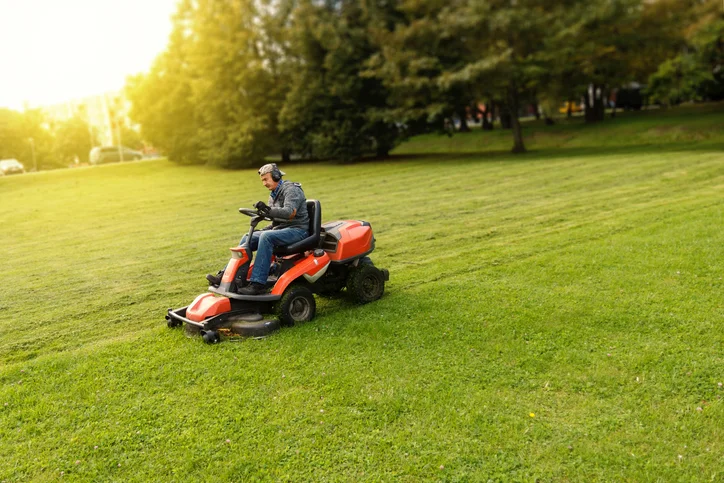
A professional mowing service that adjusts to actual growth rate, rather than mowing on autopilot, means you’re not paying for a service the lawn doesn’t need in slower months, and you’re not under-mowing during the stretches when the grass needs it most.
Aeration: Once a Year Is Usually Enough
Aeration doesn’t need to happen often, but skipping it entirely is one of the more common mistakes homeowners make. For most cool-season lawns in this region, aerating once a year, ideally in early fall, is enough to relieve soil compaction and let water, air, and nutrients reach the root system. Heavily trafficked lawns, or those with dense clay soil, which is common throughout St. Louis County, can sometimes benefit from a second aeration in spring, but that’s the exception rather than the rule.
The bigger issue isn’t frequency so much as timing. Aerating in the middle of summer heat stress or right before a hard freeze does less good than hitting that early fall window when grass is actively growing and can recover quickly from the plugs pulled during the process. A lawn aerated at the wrong time of year can look rougher for weeks with little of the long-term benefit that fall aeration provides.
One sign that your lawn needs aeration more urgently is water pooling on the surface after rain instead of soaking in, or grass that feels spongy or unusually hard underfoot. Both point to compacted soil that mowing and watering alone won’t fix. A properly timed aeration service addresses that directly.
Overseeding: Timing Matters More Than Frequency
Overseeding usually pairs with aeration, and for the same reason: fall is when cool-season grass seed germinates best, with warm soil and cooler air giving new seedlings time to establish before winter. Most lawns don’t need overseeding every single year. A lawn that’s thick and healthy might only need it every two to three years to fill in thinning patches or replace grass lost to foot traffic, pet activity, or disease.
Where frequency does matter is on lawns recovering from a rough patch, drought damage, grub activity, or heavy shade thinning. Those lawns may need overseeding annually for a couple of years until density is restored. It’s also worth noting that overseeding without aeration first is far less effective, since seed has a harder time making good soil contact through thatch and compacted ground. That’s part of why the two services are usually scheduled together rather than as separate line items.
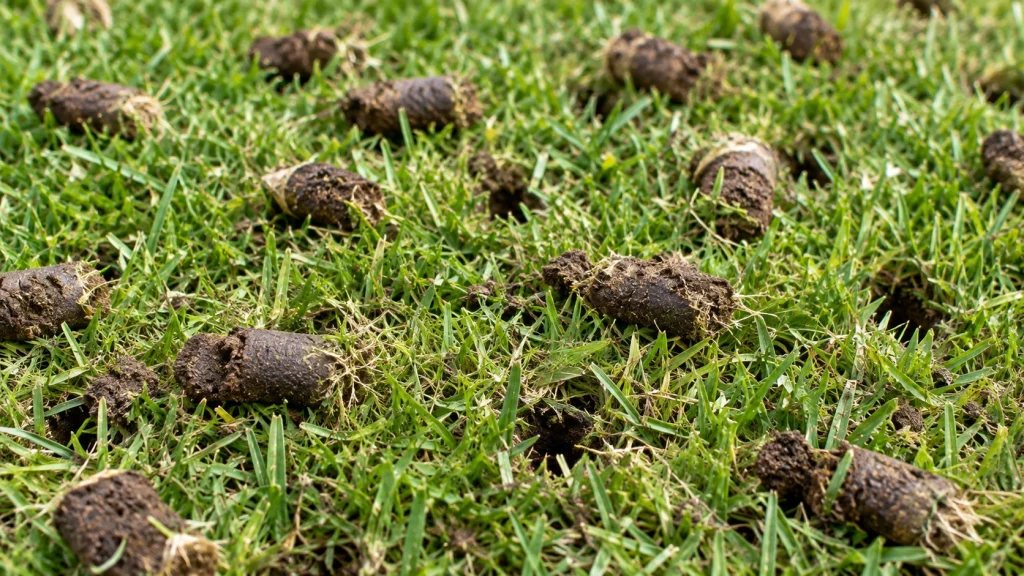
A properly timed overseeding service works with the aeration schedule rather than against it, which is where a lot of the value actually comes from.
Mulching: A Seasonal, Not Weekly, Task
Mulch gets refreshed, not maintained weekly. Most beds do well with one application per year, typically in spring, to suppress weeds, retain soil moisture through summer, and give the landscaping a clean, finished look. Organic mulch breaks down over the growing season, so by the time next spring rolls around, it’s usually thin enough to need replenishing.
Some properties, particularly ones with heavy weed pressure or beds that get a lot of sun exposure, benefit from a lighter top-up in fall as well. But two applications a year is typically the ceiling for most residential properties. If you’re unsure whether your beds need it, a quick way to check is whether you can still see 1 to 2 inches of mulch depth. Below that, it’s time for a refresh. A mulching service can handle both the spring application and any fall touch-up in one visit.
Leaf Removal: Frequency by Season
Leaf removal is the one service where frequency genuinely spikes during a narrow window. From mid-October through late November, weekly or biweekly leaf removal is often necessary just to keep leaves from smothering the grass underneath. A thick layer of wet leaves left on a lawn for more than a couple of weeks can block sunlight and trap moisture, creating conditions for fungal issues going into winter, and can also suffocate grass that’s trying to store energy in its roots before dormancy.
Outside of that fall window, leaf removal isn’t a recurring need at all. It’s a seasonal service, not a year-round one, which is part of why bundling it with fall aeration and overseeding makes practical sense from both a scheduling and cost standpoint. A leaf removal service timed around that October to November window covers the period when it actually matters.
Gutter Cleaning: An Often-Overlooked Piece of Lawn Care
Gutter cleaning isn’t technically about the grass, but it directly affects lawn and landscape health, since clogged gutters overflow and can erode beds, wash out mulch, or create standing water near the foundation. Most homes do well with gutter cleaning twice a year, once in late spring after seed and pollen debris clears, and once in late fall after leaves have dropped. Properties with a lot of overhanging trees may need a third cleaning mid-summer. A gutter cleaning service timed around those two main windows is usually sufficient for most West St. Louis County properties.
When Sod, Drainage, or Retaining Walls Come Into Play
Unlike the recurring services above, sod installation, drainage work, and retaining walls aren’t on a repeating schedule at all. These are one-time or as-needed projects rather than ongoing lawn care. Sod might come into play if a section of lawn is beyond what overseeding can reasonably fix, such as a large bare patch from construction damage or prolonged shade. Drainage solutions typically get addressed once a persistent water problem, like pooling after rain or erosion along a slope, becomes noticeable rather than on any set interval. Retaining walls are usually a landscape design or erosion-control decision made once, not something revisited annually.
It’s worth keeping this distinction in mind so you’re not budgeting for these as recurring costs the way you would mowing or mulching. They’re solutions to a specific problem, and once that problem is addressed properly, it typically doesn’t need repeating for years.
Signs Your Current Schedule Isn’t Matching Your Lawn
A few practical signs can tell you whether your current lawn care frequency is off in either direction. If your grass looks stressed or thin within a week or two of mowing during summer, that can point to cutting too short or too often during heat stress rather than not often enough. If weeds are establishing quickly in beds, that often points to mulch being applied too thin or too infrequently rather than a mowing problem. And if water pools in the yard after every rain, that’s more often a drainage or aeration issue than something more frequent mowing will resolve.
On the other side, a lawn that looks patchy or thin heading into winter despite regular mowing is often a sign that aeration and overseeding have been skipped for too many seasons in a row, even if mowing has been consistent.
Building a Lawn Care Schedule That Actually Works
Put together, a realistic annual schedule for a typical West St. Louis County lawn looks something like this. Weekly mowing through spring and early summer, shifting to biweekly during peak summer heat, then back to weekly in early fall. Aeration and overseeding land in early fall, ideally on the same visit. Mulching happens once in spring with an optional fall refresh. Leaf removal runs weekly through the October and November window. Gutter cleaning fits in twice a year, aligned loosely with the spring and fall transitions. Sod, drainage, and retaining wall work get addressed as specific issues come up rather than on a repeating calendar.
None of this needs to be tracked on a spreadsheet. It’s really about matching effort to what the season and the grass are actually doing, rather than assuming more visits automatically means a better-looking lawn. Overdoing certain services wastes money, and underdoing others shows up as thinning, weeds, or drainage problems within a season or two, often not becoming obvious until the damage is already visible.
If you’re not sure where your lawn currently stands or which of these services it actually needs right now, that’s worth a conversation rather than a guess. A Kick in the Grass Lawn Service works with homeowners throughout Chesterfield, Ballwin, Wildwood, Ellisville, Des Peres, Kirkwood, Creve Coeur, and Maryland Heights to build a maintenance schedule around what your lawn needs each season, not a one-size-fits-all visit plan. Call (314) 471-6186 for a free lawn assessment to see how a properly timed schedule can get your lawn looking the way it should.
